Founder Profile: Sabi Juice on the Customer Education Gap

Consumers today are overwhelmed with options, and with information. That means for health- & wellness-focused food & beverage brands, educating consumers can play a big role in your marketing and communication strategy.
In this profile we speak with Carmen Herrera, founder of Sabi Juice, a fresh juice and smoothie purveyor focused on creating nutritional drinks that rejuvenate the gut-brain connection.
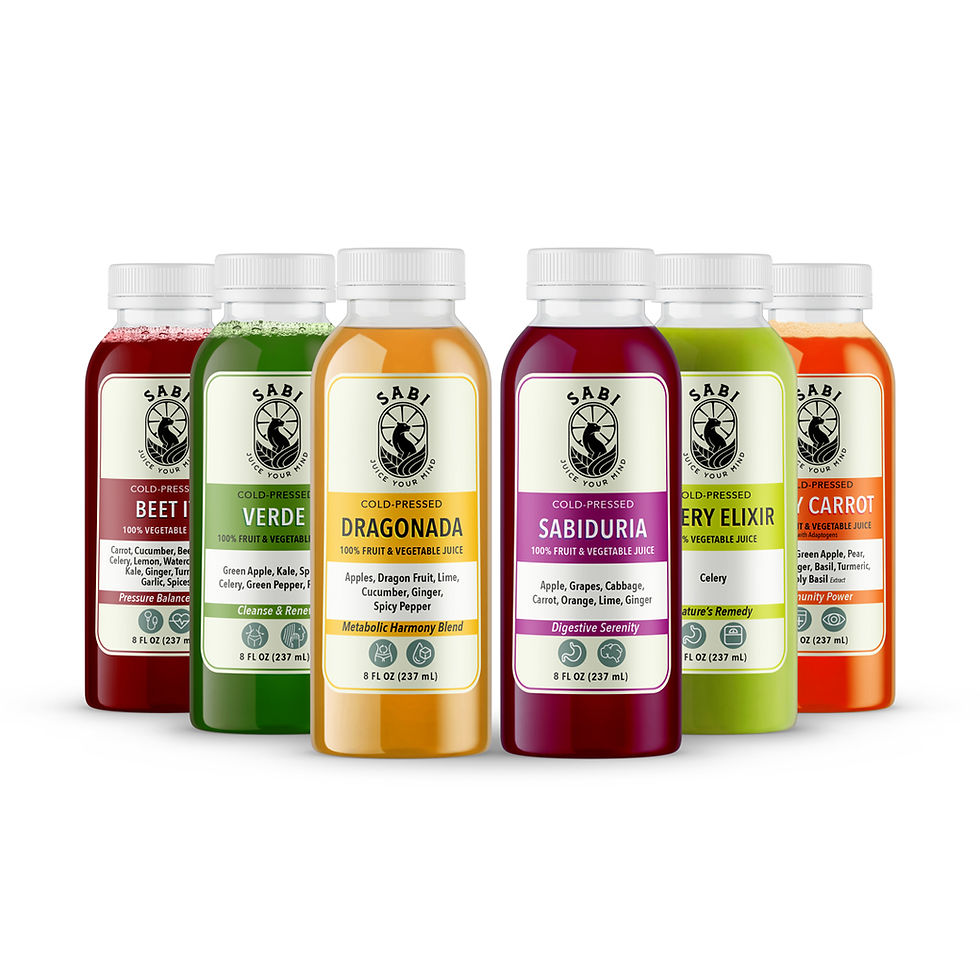
A core challenge for Sabi Juice is the customer education gap: many people know the benefits of fruits and vegetables, but they might not understand the nutritional difference between a gallon of shelf-stable orange juice at the grocery store, and a freshly pressed raw juice from local ingredients. Helping customers realize the benefits that Carmen herself has long benefitted from is a critical step to getting a loyal customer base.
In this interview, we talk about how Carmen transitioned from a corporate career to launching Sabi Juice, how she discovered the benefits of juicing, and how her customers have responded to her products.
What did we learn from Carmen?
Lean on your network. Farmers markets are not always a starting point (see: 2-year-long waitlists), but there are many alternative events to cut your teeth on. Large conferences, sports events, and friendly pop-up markets may just be the thing to kick off your brand.
Listen to your customers. Communicating with your audience is not one-directional. Learning from your customers can help you narrow down where your value truly lies in the community.
Read on for the full transcript of the interview.
Sabi Juice Profile Interview
Charlene Burns
Carmen, thank you again for joining me for this conversation as part of Lazy Su's Founder Profile series. I'm super excited to talk to you and hear a little bit more about your story with founding Sabi Juice.
I have my own relationship to juicing that we can get into later, but I think it's something that I've noticed–especially in the San Diego and Southern California food and beverage space–of people entering entrepreneurship through their own personal journeys or family journeys with wellness and health. Especially in the food and beverage industry, it's so important to cater towards well-being and nourishment when it comes to your relationship to customers. So, yeah, super excited to have this conversation with you.
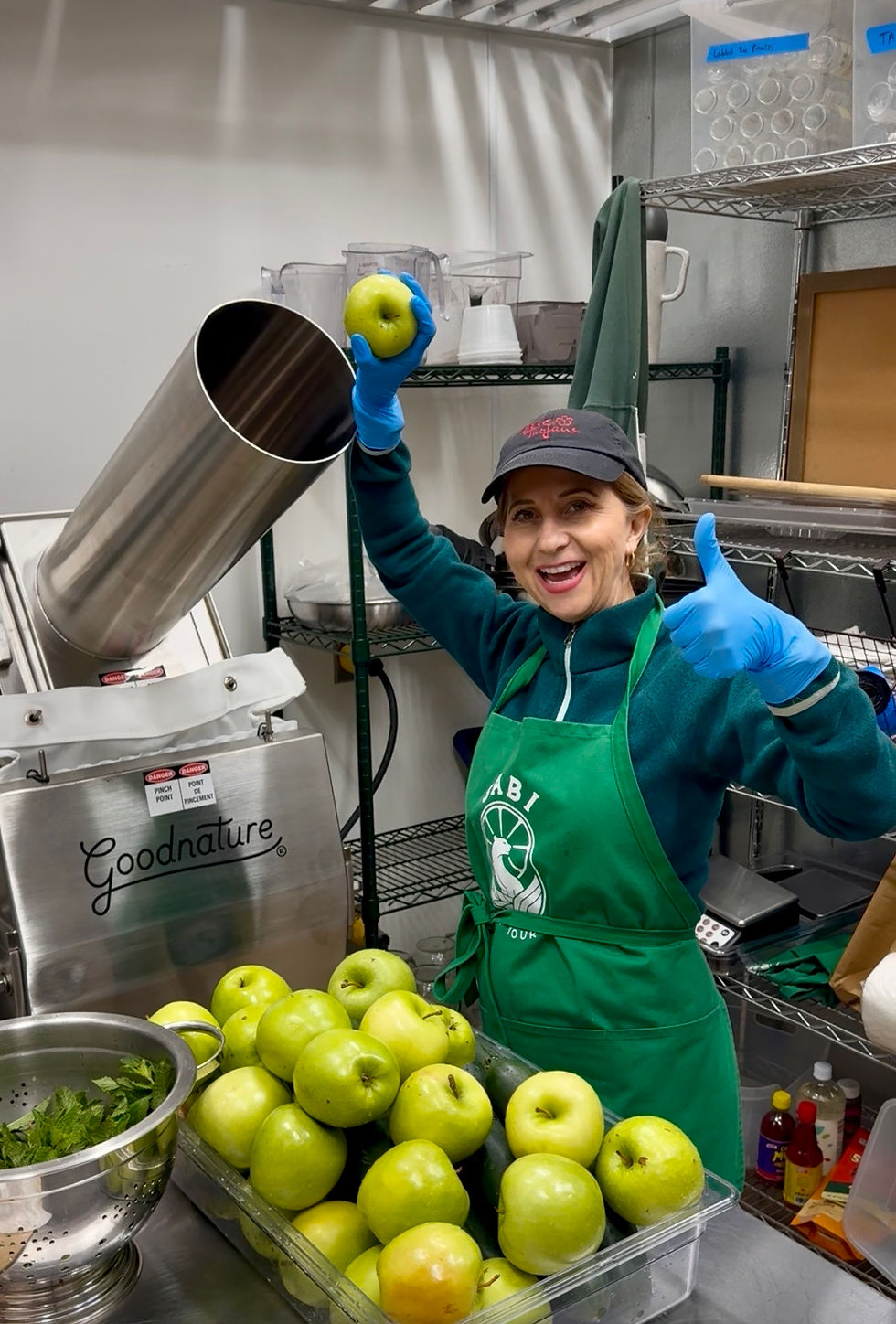
Carmen Herrera
Yeah, thank you. Happy to be here and happy to share. So thank you.
Charlene
Why don't we start off with just kind of talking about your background? I know you transitioned from the corporate world into entrepreneurship with Sabi Juice, and I’d love to hear about it.
Carmen
Sure. So I spent almost three decades in corporate–in the finance, accounting, and operations side of the house. I learned an amazing great deal. So on paper everything looked wonderful and successful, and I could have stayed on that track.
But during COVID, I really began asking myself, just like a lot of other people during that time frame did a switch–whether it was leaving their their corporate job or what have you. So it was really more about building and wanting to do something that I was having more impact, especially around that same time. My family was struggling with anxiety, depression neurodiversity. So I started looking deeper into nutrition, brain health, and the connection between food and how we feel.
That's when I realized that I couldn't find juices that reflected what I grew up with, the flavors that I grew up with. So I started making them myself. That's really how the journey of personal wellness came to life and brought Sabi Juice to life. It's a brand that I'm truly proud of focusing on culture, brain health, and wellness.
Charlene
Following up on that, I know one of the key elements of your branding and identity for Sabi Juice is that you don't use, ff I'm getting this right, high pressure processing. For people who don't really know what that is or understand or why some companies use it, can you explain a little bit more about the process and why specifically you decided not to go down that path with Sabi Juice?
Carmen
Right. High pressure processing or HPP is a method that many juice companies use to basically extend the shelf life. But what happens through that process is that the bottles are placed under extreme high pressure, which reduces the microorganisms in the juice, and it makes it last much longer.
For Sabi, we went a different path. We wanted to create small batches and have raw juice. It's a live juice, so it keeps the good gut bacteria, the freshness, and it keeps its full nutritional value. As soon as we're done juicing, we bottle it without going through any preservation step. So then it's focused on the entire brand, where it's keeping the food obviously fruits and vegetables in its most natural state as much as possible.
Charlene
I mentioned earlier–actually kind of COVID related too. I ended up having long-COVID symptoms for a good year of my life, and I had previously been a long distance runner..so it was just a really significant shift in my physical health. My mom was big into doing her own research into what nutritional benefits there were, and she got me onto celery juicing in particular.
And I think for maybe a couple years I was celery juicing every single day. I myself am not really familiar with the kind of nutritional scientific side of things, but I know that it helped. I know that if I didn't do it for a few days, I wouldn't feel as good. And once I did, I was able to run again and live my life more normally.
But how did you go from doing your own research, focusing on juicing specifically, and then deciding to go from that being just a part of your household diet to wanting to share that more broadly?
Carmen
I found that when I made the gut brain connection, it just all made sense. With a consistent diet including fruits and vegetables on a regular basis in your diet, you can just feel the difference. For me, it wasn't about selling juice per se, but it was trying to support the community that I grew up in, that I felt needed a little bit more education in terms of keeping things like we grew up.
They were raw, things weren't as highly processed as they are today. It was about ensuring that we were taking in more fruits and vegetables, and it made a huge difference. I saw the difference in symptoms and just overall well being from physical health as well as mental health. So, like I said, once I experienced that, I really wanted to get this out into the community.
It's really been a labor of love. It's more of bringing that education to the community. It's something that I'm passionate about, one person at a time, one community at a time. So that's my path forward.
Charlene
I know you've mentioned this a little bit about using flavors and ingredients that you were familiar with from your childhood. How have you transferred that knowledge to people here?
What education do you feel like you need to do around ingredients or around the product generally to be able to convey to folks what you understand the benefits to be? Like, do you feel like there's a gap these days between how people are oriented towards fruits and vegetables? Or do you feel like there has been a shift where people are kind of coming to you already knowing some of the things that you're hoping to educate people on?
Carmen
That's a great question. I do believe there's a huge education gap, certainly in some underserved communities. I think it's so easy to grab highly processed food or fast food, and it's inexpensive comparatively speaking to more wholesome food.
I find that in certain food deserts, people just don't have the access to the fruits and vegetables that I grew up with. I mean, I'm talking cactus. My mom grew it in the backyard, and it just grows wild, and it's so nutritious! The jamaica, or hibiscus, are things that I grew up with. Chayote, which is a vegetable root. Berro, which is watercress. I learned that watercress is extremely high in antioxidants. It's great for brain health.
Some of the few top ingredients that I learned are great for brain health are blueberries, watercress, and Concord grapes. So I try to incorporate these into my juices. But I do believe there is a gap in underserved communities, food desert communities, in bringing good nutrition access on a regular basis. So it's again one day at a time. It's not easy, but I've seen the value and I've seen the difference in my own family.
It's not a hidden secret. They're all considered superfoods, but it's something I grew up with. I didn't even know what a superfood was. It was already in my household. And I think it's just reintroducing these ingredients that are fresh and maybe combined with other flavors that people grew up with and will want to try and feel good about.
Charlene
From the perspective of a business owner who is trying to segment their audience and trying to understand “What channels am I targeting and how do I message to them?”
What has your strategy been around handling the education gap as it relates to your product? We met at the Gluten Free Pop Up Market, so that's obviously a channel that you've gotten involved in. But between online education, whether it's the branding on your site or your Instagram, where do you think you have spent the most time and energy for your business to communicate with your customers?
Carmen
I've done a lot in the community in Southern California, both in San Diego and Los Angeles. In my past life, I was pretty involved in the community with the various chambers, ethnic chambers, women's events. I've sat on nonprofit boards like Ronald McDonald House of Charities, ALPFA, which is an association of Latino professionals. I was always involved in the community, so I knew that that was something that was important to me. So that's where I started.
Frankly I tried to seek out some of the larger farm farmers markets or more popular farmers markets that had pretty extensive wait lists. And so I pivoted to my network.
Being able to go to promote this at women's conferences. Nonprofit partnerships, golf tournaments, local business organizations. I've done a lot with San Ysidro Health. I did their golf tournament recently. I did Altamed golf tournaments, and more recently White Memorial Hospital. So that was one avenue. Latina Golfers Association is another organization that I've supported. March of Dimes, American Cancer Society through their breast cancer walk at Snapdragon Stadium.
These are just a lot of events that I've been very fortunate to have been invited to. That's how I've been getting the word out. I still have a ways to go, but I've been just pleasantly surprised at the support I've had through my past life and my network to be able to access the community.
Charlene
Since we're already reflecting on your journey of how you've gotten to where you are now, and also looking ahead, of course. In the early stages of setting up Sabi Juice, were there any unexpected challenges or obstacles that you came across?
Carmen
Certainly, yes. So I think one of them I already mentioned was the farmers market. I didn't realize how challenging some of these long-standing farmers' market are. How challenging it is to get into some of these with a long, multi-year wait list. Certainly that was one.
Then really, we talked about it as well. But the education that's involved in launching a fresh juice company, and helping people understand why a fresh and minimally processed juice is different from what's in the market. I can go into a resale retail store. The shelf life is 30-45 days, three months, six months. At that point, you're drinking water, sugar, and flavor. It costs less, of course, but you've already lost that nutritional value.
So I think just the education piece is something that I continuously, constantly have to work on. My focus is bringing the product to the community and meeting people where they're at. And that way, in those conversations, I get to learn more. I get to understand anything that they share that may help me understand what the needs are in the community.
I can give you an example. When I did a golf tournament for Latina Golfers Association in Altadena, it was, I want to say, 108 degree weather. [Charlene: Wow.] It was insane that the golf tournament was not canceled.
I was stationed at hole number five, and there was a lady that came through. She was dehydrated, she had a headache. And she's like, "Carmen, do you have something for me?” And I gave her my cactus blend juice, the Nopalito, and she came back smiling. She said, "My headache went away.”
She was basically just dehydrated in 108 degree weather. You're not drinking enough like electrolytes. So now she's a big supporter. She saw the immediate value that this had from having the right antioxidants and high electrolytes. The cactus is high in electrolytes, also used for vitamins, minerals, hangovers. It's right up there along with coconut water.
Charlene
I want to tap into something you mentioned about meeting people where they're at, and then presumably receiving feedback from the community as well. I'm making some assumptions here, but I noticed you have your core juice/smoothie offerings, and I've also noticed some almond milk products as well. I'm curious if that was something you started with, or if that was something where you learned there was interest and it grew alongside Sabi Juice.
Carmen
Right, a great question. My plant-based milks grew after I had the juice and the smoothies, because I did see an appetite for plant based milk. Especially when I started attending and going to the Gluten Free Pop Up Market there in Normal Heights, also supported by the Celiac Foundation.
I learned that that community just has so many allergies, and so they look at every label. They want to know exactly what's in the product. So in order for me to provide the smoothies, I noticed that the almond milks in the market have 12 ingredients, including gums. I said I can't possibly put that in my smoothies and serve it to this community.
That's when I started including my own plant based milk, my almond milks, into my smoothies. I'm very proud that it is a very clean line. I know exactly what's in my almond milk. It's almonds, water, vanilla, and cinnamon, and that's it. No preservatives, nothing else, and it's super creamy. I think it really elevates the product, and it's great tasting, and it's truly just a wholesome product.
Charlene
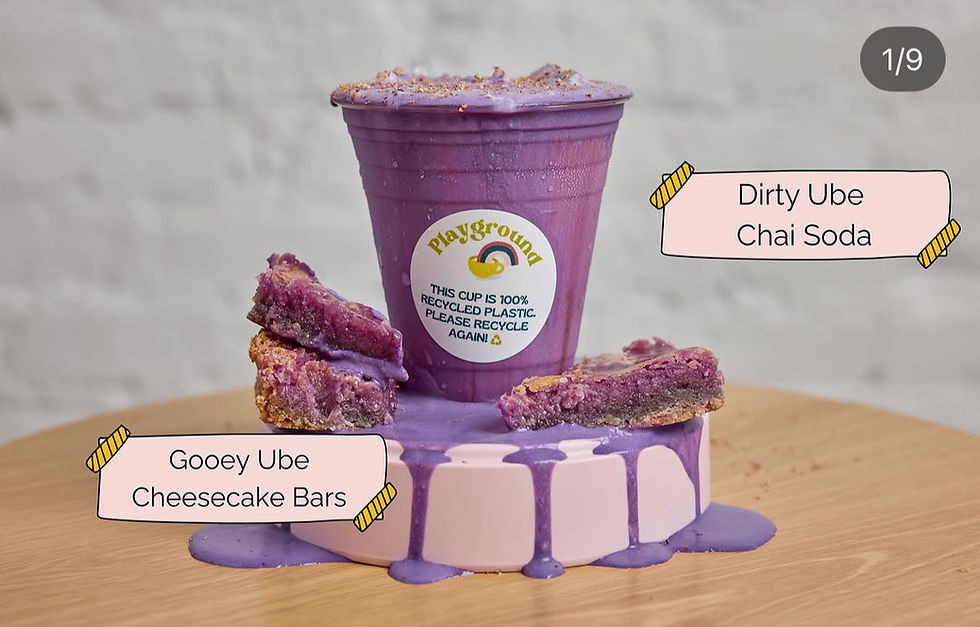
This is a thread that has actually been pulled with a few of the founders I've interviewed for this series. Where, for example, there's a cafe called Playground Art and Coffee. They're a bit newer in San Diego, but they're also another brand that kind of focuses on having all organic. I think they also offer vegan, gluten free options as well. They're very intentional, basically, about having whole ingredients and trusting where they're sourcing things.
I think that is something that comes through when you have a community-oriented brand. You are showing the same value that you have for yourself to your customers as well. When you're more rooted in the customers that you're working with or selling to, the brand ends up being more thoughtful and more conscious of everyone's health and everyone's well being, which is really important.
Carmen
I think it's important. I think we've lost track of how much is going into our food, right? Growing up, my mom and my grandmother would go to the backyard when we had a stomach ache or cold. She'd go to the backyard and pull some tea leaves, boil them, and give them to us.
That's going back to the basics and going back to our roots is really important. It’s not that difficult to do–certainly it takes time, but these natural herbs and roots just have so many medicinal purposes. And they're in our backyard! So we just have to explore that a little bit more.
Charlene
I want to ask one of my favorite questions to ask, which is: Is there a specific drink in your inventory that is your favorite, or that you feel like speaks the best to you and your brand?
Carmen
Yes, absolutely. Actually, two. One is my cactus blend or the Nopalito. That pretty much represents everything that Sabi stands for. Again, growing up, cactus was always in our home. It wasn't trendy, it was just simply part of our culture.
Today when people taste it, they're surprised by the flavor. They're expecting to taste something that tastes odd, but it's truly just really refreshing. I's just one of my favorite memories that I shared already that happened at the golf tournament with a woman coming back and saying, "Wow, this was incredible!”
I always knew growing up that cactus was not only nutritious, but people always had it the next morning after a Saturday night of partying. So I knew it was good for hangovers. But I have come to learn that it has a lot more natural remedies, if you will.
Then the other one would be my abuela's chocolate almond milk. Every sip reminds me of drinking hot chocolate and having pan dulce with my grandmother. So I would say those two are probably my staple, and actually some of my best sellers.
Charlene
That's lovely. Okay, I also want to give you a chance to shout out anything that you have coming up or that you would just like to share with the San Diego community.
Carmen
Well, you can find me at the Gluten Free Pop Up Market, Normal Heights. We're there once a month on Adams Avenue. You can look up the dates at the Celiac Foundation website. I also list them on my website. There's a calendar if you want to look for pop up events where Sabi will be.
We're just continuing to do pop ups throughout Southern California, and bringing awareness of the gut brain connection to the community. If we can be supportive to anyone we're here. We're here to listen. We're here to educate. So feel free to reach out. You can find me on my website, sabijuice.com.
Charlene
Okay, perfect. Thank you for sharing your story.
Carmen
Thank you, thank you, truly appreciate it.
Transcribed by Otter.ai. Lightly edited for clarity.
Comments